
 EN
EN
 AR
AR
 NL
NL
 FR
FR
 DE
DE
 EL
EL
 HI
HI
 IT
IT
 JA
JA
 KO
KO
 PL
PL
 PT
PT
 ES
ES
 ID
ID
 VI
VI
 TH
TH
 TR
TR
 MS
MS
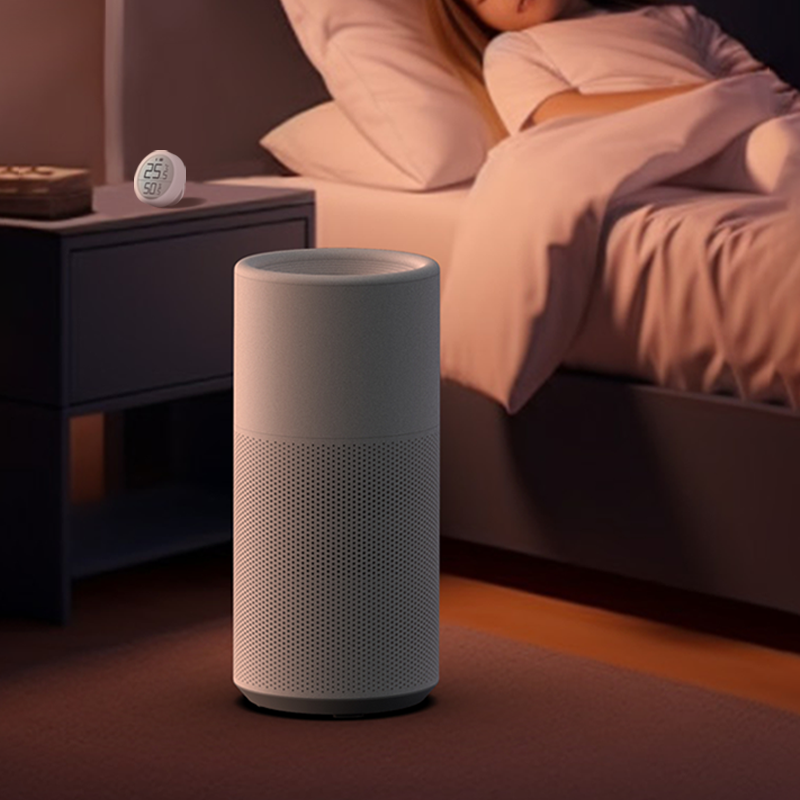
Indoor air quality is a growing concern for families who spend significant time in their bedrooms and living rooms. Dust mites, pet dander, pollen, mold spores, and airborne bacteria can accumulate in these enclosed spaces, triggering allergic reactions, disrupting sleep, and reducing overall comfort. Understanding how an air purifier for home works is the first step toward building a healthier indoor environment for you and your family.
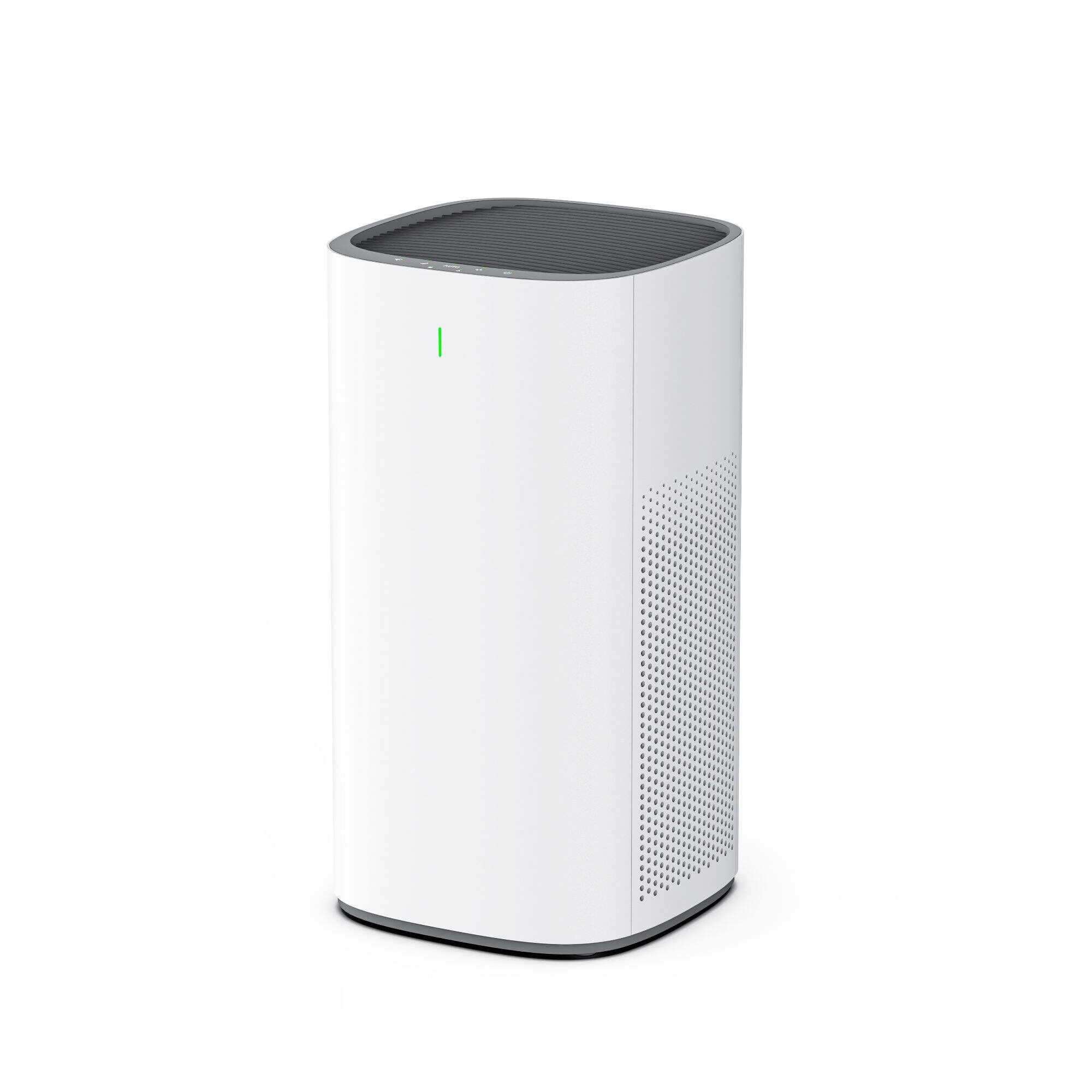
An air purifier for home uses a combination of filtration technologies and airflow mechanics to capture, neutralize, and remove microscopic allergens before they can be inhaled. The process is continuous and largely silent, making it especially effective in spaces where people spend long, uninterrupted hours — particularly during sleep or while relaxing in the living room. This article explores exactly how this technology reduces allergens, which filtration stages matter most, and why room-specific placement is a key factor in getting the best results.
The Core Mechanism Behind Allergen Reduction
How Airborne Allergens Enter and Circulate Indoors
Before understanding how an air purifier for home removes allergens, it helps to know how those particles behave in enclosed rooms. Allergens such as pollen, pet dander, and dust mite feces are extremely lightweight. Once disturbed — by foot traffic, bedding movement, or HVAC airflow — they become suspended in the air for extended periods and are easily inhaled.
In bedrooms, the primary sources are mattresses, pillows, carpets, and curtains, which harbor dust mites and their byproducts. In living rooms, pet activity, upholstered furniture, and frequent door openings introduce a broader range of allergens. Without active filtration, these particles continuously recirculate with every breath, significantly raising allergen exposure over time.
An air purifier for home breaks this cycle by drawing the surrounding air through a series of filtration stages, capturing particles before they can settle back into the environment or enter the respiratory system. This active removal process fundamentally changes the allergen load in the room.
The Role of Continuous Air Circulation in Filtration Effectiveness
The effectiveness of an air purifier for home is directly tied to how many times it can cycle the room's air per hour — a measurement known as Air Changes per Hour (ACH). For allergen reduction in bedrooms and living rooms, most experts recommend a minimum of four to five air changes per hour. At this rate, the concentration of suspended allergens decreases measurably within the first hour of operation.
A well-designed air purifier for home draws air in from multiple directions using a 360-degree intake or a high-capacity fan system, ensuring no stagnant air zones are left untreated in the room. The treated, clean air is then gently redistributed without creating drafts that would stir up settled particles from surfaces.
This combination of high ACH and smooth airflow distribution means that the air purifier for home doesn't just clean a portion of the air in a room — it systematically processes all of it, driving allergen levels down consistently over time rather than in isolated bursts.
Filtration Technologies That Target Specific Allergens
HEPA Filtration and Its Allergen Capture Rate
The most critical filtration component in any air purifier for home is the High-Efficiency Particulate Air (HEPA) filter. True HEPA filters are certified to capture at least 99.97% of particles as small as 0.3 microns in diameter. To put this in perspective, most common allergens — including dust mite debris, pet dander, and mold spores — fall within the range of 1 to 100 microns, making them highly susceptible to HEPA capture.
The HEPA filter works through three distinct physical mechanisms: interception, impaction, and diffusion. Larger allergen particles are captured through direct impaction when they collide with filter fibers. Medium-sized particles are intercepted as they follow airflow paths close to filter fibers. Very fine particles, due to their random Brownian motion, are trapped through diffusion. This multi-mechanism approach is what makes HEPA so effective across a broad particle size range.
For households with allergy sufferers, this makes the HEPA filter the non-negotiable core of any air purifier for home. Without it, other filtration layers simply cannot achieve the fine-particle removal rates necessary to meaningfully reduce allergen exposure in bedrooms and living rooms.
Pre-Filters, Activated Carbon, and Multi-Stage Filtration
Most high-quality air purifier for home units are designed with multiple filtration stages to address different allergen types and to extend the life of the HEPA filter. The pre-filter stage captures larger particles such as pet hair, lint, and coarse dust before they reach the main filter. This not only removes a significant portion of allergens early but also prevents premature clogging of the more expensive HEPA layer.
Activated carbon filters address a different but related indoor air quality issue: volatile organic compounds (VOCs), odors from pets, cooking, and cleaning products. While not allergens in the strict immunological sense, these chemical irritants can worsen allergy symptoms and respiratory discomfort, particularly in people who are already sensitized. An air purifier for home that combines HEPA and activated carbon filtration provides a more complete solution for both allergen reduction and air quality improvement.
Some advanced air purifier for home models also incorporate UV-C light or ionization stages to neutralize bacteria, viruses, and certain mold spores. These additional stages can be beneficial in households where biological allergens are a particular concern, such as homes with visible mold issues or those located in high-humidity climates where mold spore counts in outdoor air are elevated.
Bedroom-Specific Allergen Reduction Strategies
Why Bedrooms Present the Highest Allergen Risk
Bedrooms are the single most important space to address with an air purifier for home, and the reason is rooted in biology and behavior. People spend approximately six to eight hours per night in the bedroom, during which the immune system operates in a recovery mode that may heighten sensitivity to allergens. Exposure to dust mites, mold, and pet dander during sleep has been consistently linked to worsening allergic rhinitis, asthma symptoms, and disturbed sleep quality.
Mattresses and pillows are particularly dense habitats for dust mites. Studies have found that a typical mattress may harbor millions of dust mites, with their fecal particles and shed skin fragments becoming airborne every time the bedding is disturbed. Running an air purifier for home in the bedroom — especially during sleeping hours — ensures these airborne particles are captured before prolonged inhalation can occur.
The relatively smaller volume of most bedrooms compared to open-plan living areas also means that an air purifier for home can achieve a higher effective ACH in this space, even at lower fan speeds. This translates to quieter operation at night without compromising filtration efficiency, which is a significant practical advantage for light sleepers.
Optimal Placement and Operating Habits for Bedroom Allergen Control
To maximize allergen reduction in a bedroom, the air purifier for home should be positioned at floor level or on a nightstand near the breathing zone — typically within a few feet of the bed. This ensures that the air being drawn into the unit is sourced from the area where allergen concentrations are highest and where inhalation exposure is most direct.
Running the air purifier for home at least 30 to 60 minutes before bedtime allows the unit to reduce the ambient allergen concentration in the room before sleep begins. Many households find it beneficial to run the unit continuously on a low or medium setting throughout the night, as this maintains steady allergen suppression rather than allowing levels to rebuild between intermittent cycles.
Complementary habits — such as using allergen-proof mattress and pillow covers, washing bedding weekly in hot water, and keeping pets out of the bedroom — amplify the effectiveness of an air purifier for home. The combination of source reduction and active air filtration produces significantly better results than either approach alone.
Living Room Allergen Dynamics and Air Purifier Performance
Unique Allergen Challenges in Living Rooms
Living rooms present a different allergen management challenge compared to bedrooms. These spaces are typically larger in volume, experience more frequent human activity, and are often home to upholstered sofas, rugs, and curtains that trap and release allergens continuously. Pet owners face an especially complex situation, as pet dander from dogs and cats becomes embedded in soft furnishings and is re-aerosolized every time someone sits down or moves through the space.
Pollen infiltration is another significant concern in living rooms, particularly for homes in suburban or rural areas during spring and autumn. Even when windows are kept closed, pollen can enter through door gaps, ventilation systems, and on clothing. An air purifier for home running in the living room captures incoming pollen particles before they accumulate to allergy-triggering concentrations.
Mold spores represent a third living room allergen concern, especially in homes with limited ventilation or visible moisture issues near windows or external walls. An air purifier for home with HEPA filtration is effective at removing airborne mold spores, though it is important to understand that the unit addresses airborne particles rather than mold growth on surfaces, which requires separate remediation.
Sizing and Positioning an Air Purifier for Home in Open Living Spaces
In larger living rooms or open-plan layouts, the Clean Air Delivery Rate (CADR) of the air purifier for home becomes the most important specification to evaluate. CADR measures the volume of clean air produced per minute and is rated separately for dust, pollen, and smoke. For living rooms above 300 square feet, selecting an air purifier for home with a CADR that matches or exceeds the room size ensures adequate allergen removal without the unit struggling to keep up with the space's air volume.
Positioning the air purifier for home in a central location, away from walls and furniture that would block air intake, allows the unit to draw from the full room volume. In open-plan homes where the living room connects to a dining area or kitchen, placing the unit near the boundary between spaces can help filter allergens migrating from cooking activity as well.
Operating the air purifier for home consistently during peak activity hours — when family members are home, when pets are active, or when windows are opened briefly for ventilation — creates the most effective allergen management routine for living spaces. Continuous low-speed operation between peak periods maintains baseline air quality without significant noise or energy impact.
FAQ
How long does it take for an air purifier for home to reduce allergens noticeably?
Most users report a noticeable improvement in air quality and a reduction in allergy symptoms within 30 to 60 minutes of running an air purifier for home in a closed room. For measurable reductions in allergen particle counts to levels below allergy-triggering thresholds, continuous operation over several hours is typically required. Long-term allergen management improves progressively over days of consistent use.
Should an air purifier for home run continuously or only when someone is in the room?
For optimal allergen reduction, running an air purifier for home continuously — even at a low speed when the room is unoccupied — is more effective than running it only during occupancy. Allergens accumulate and settle whenever the unit is off, meaning intermittent use allows concentration levels to rebuild between sessions. Continuous operation prevents this re-accumulation cycle and maintains a consistently lower allergen load.
Can one air purifier for home cover both a bedroom and a living room?
A single air purifier for home is generally most effective when used in one enclosed room at a time. Moving the unit between rooms is a practical compromise for those with budget constraints, but it means periods of unfiltered air accumulation in whichever room the unit is absent from. For households where allergen exposure is a health priority, using a dedicated air purifier for home in each high-use space — particularly the bedroom — is the recommended approach.
Does an air purifier for home help with pet allergies specifically?
Yes, an air purifier for home with a true HEPA filter is highly effective at capturing pet dander, which is one of the most common and persistent indoor allergens. Pet dander particles are small enough to remain airborne for extended periods but large enough to be efficiently captured by HEPA filtration. Combined with regular vacuuming of soft furnishings and washing of pet bedding, an air purifier for home can significantly reduce pet allergen exposure for sensitized individuals.
Table of Contents
- The Core Mechanism Behind Allergen Reduction
- Filtration Technologies That Target Specific Allergens
- Bedroom-Specific Allergen Reduction Strategies
- Living Room Allergen Dynamics and Air Purifier Performance
-
FAQ
- How long does it take for an air purifier for home to reduce allergens noticeably?
- Should an air purifier for home run continuously or only when someone is in the room?
- Can one air purifier for home cover both a bedroom and a living room?
- Does an air purifier for home help with pet allergies specifically?