
 EN
EN
 AR
AR
 NL
NL
 FR
FR
 DE
DE
 EL
EL
 HI
HI
 IT
IT
 JA
JA
 KO
KO
 PL
PL
 PT
PT
 ES
ES
 ID
ID
 VI
VI
 TH
TH
 TR
TR
 MS
MS
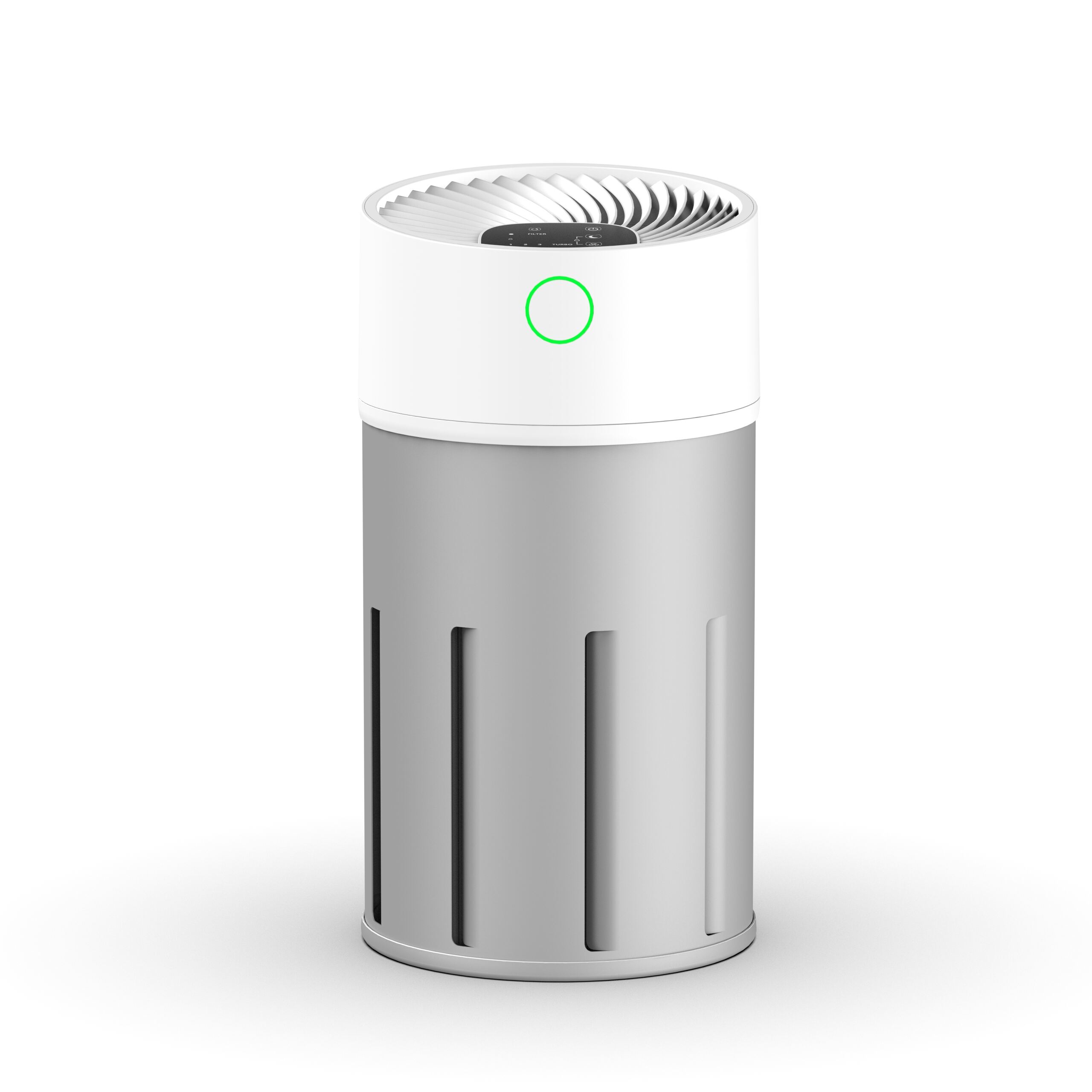
For pet owners, maintaining clean indoor air is far more complex than simply reducing visible dust. Dander, fur, volatile organic compounds from litter boxes, and airborne allergens generated by animals create a layered contamination profile that demands a purpose-built response. A pet air purifier is designed specifically to address this multi-pollutant environment, but not all units perform equally. Understanding what actually defines efficiency in these systems is the difference between buying a device that genuinely cleans the air and one that merely circulates it.
The efficiency of a pet air purifier filtration system is not a single metric. It is the product of several interacting technical and physical factors — from filter media composition and airflow dynamics to room coverage calculations and maintenance intervals. Each of these variables contributes directly to whether the unit can consistently reduce the specific pollutants that pets introduce into a home. This article examines each of those factors in depth, providing the analytical framework that buyers, specifiers, and facility managers need to evaluate these products with confidence.
Filtration Media Composition and Its Role in Pet Pollutant Capture
The Multi-Layer Filtration Principle
Efficiency in a pet air purifier begins at the filter media level. A single-stage filter cannot adequately address the full range of pet-related pollutants. Pet dander particles range from 0.5 to 100 microns, while odor molecules are sub-micron volatile compounds that pass through mechanical filters entirely. Effective systems therefore rely on a staged, multi-layer approach where different filter types handle different contaminant classes.
The first layer is typically a pre-filter designed to capture large particles such as pet hair, fur clumps, and coarse debris. This protects the downstream filters from rapid clogging and extends their operational lifespan significantly. Without an effective pre-filter, finer stages become overloaded prematurely, reducing the overall system efficiency faster than manufacturers' ratings would suggest.
The intermediate layer in a well-designed pet air purifier is usually a True HEPA filter rated to capture 99.97% of particles at 0.3 microns. This is the primary defense against airborne pet dander, pollen, mold spores, and fine dust. HEPA efficiency is a well-established, internationally benchmarked standard, and its presence in the filtration stack is a non-negotiable marker of performance credibility.
Activated Carbon and Odor Control Capacity
A pet air purifier that lacks a dedicated activated carbon stage cannot claim genuine odor elimination. Carbon filtration works through adsorption — volatile odor molecules bond to the porous surface structure of activated carbon granules. The efficiency of this stage depends heavily on the quantity and quality of the carbon used. Thin carbon-impregnated sheets offer limited capacity compared to thicker, granular carbon beds.
Pet odors are chemically diverse, including ammonia from urine, hydrogen sulfide compounds, and a range of fatty acid derivatives from skin secretions. A high-capacity activated carbon filter in a pet air purifier must be dense enough to achieve meaningful contact time as air passes through. Low-density carbon stages may show initial odor reduction but saturate quickly under normal pet household conditions.
Some advanced systems incorporate additional chemical filtration media such as zeolite or potassium permanganate-treated pellets to target specific molecular families more effectively. These enhancements increase filtration breadth and are particularly valuable in multi-pet environments where odor loading is high and chemically varied.
Airflow Design and CADR Performance in Pet Environments
Understanding Clean Air Delivery Rate for Pet Pollutants
Clean Air Delivery Rate, commonly referred to as CADR, is a standardized metric that quantifies how quickly a pet air purifier removes specific pollutants from a defined space. CADR is measured separately for smoke, dust, and pollen — three categories that correspond closely to the types of fine particles generated by pets. Higher CADR numbers indicate that the unit can process more air volume per minute and deliver it back to the room in a cleaner state.
When evaluating a pet air purifier, CADR should always be matched against room size. A unit with excellent CADR ratings in a small test chamber may still underperform in a large living room where pets spend most of their time. Industry guidelines generally recommend a CADR value that enables at least four to five complete air changes per hour in the intended space to maintain consistently low particle counts.
It is also worth noting that CADR ratings are typically measured under optimal conditions with clean filters. As filters load up with captured pet dander and hair, airflow resistance increases, and effective CADR can drop meaningfully. Systems that maintain airflow efficiency over longer filter cycles — through optimized pleating geometry or high-capacity pre-filters — deliver more reliable real-world performance than raw ratings suggest.
Fan Engineering and Noise-Efficiency Balance
The fan assembly is the mechanical engine of any pet air purifier, and its engineering characteristics directly influence both airflow efficiency and acoustic output. Centrifugal fan designs typically generate higher static pressure than axial fans, which makes them better suited to push air through the denser, multi-layer filter stacks required for effective pet pollutant capture.
Noise is a practical efficiency consideration often overlooked in technical specifications. A pet air purifier that operates at high noise levels will frequently be turned down to lower fan settings by users, effectively reducing CADR and filtration throughput. Units with well-balanced impellers, vibration-dampened housings, and aerodynamically optimized air channels can achieve high airflow rates at noise levels compatible with living and sleeping spaces.
Motor efficiency also affects long-term operating costs and thermal reliability. Brushless DC motors, increasingly common in premium pet air purifier designs, consume significantly less electricity than AC motor alternatives for equivalent airflow output, while generating less heat and offering longer operational lifespans under continuous use conditions that pet households typically demand.
Room Coverage, Placement, and Airflow Circulation Efficiency
Matching Unit Capacity to Room Dynamics
Stated room coverage figures for a pet air purifier are calculated under ideal assumptions — a square room, no furniture obstruction, and uniform pollutant distribution. Real domestic environments are far more complex. Open-plan layouts, split-level spaces, soft furnishings, and the localized behavior of pets all affect how thoroughly the purifier's cleaned air reaches polluted zones.
Effective placement of a pet air purifier requires understanding the unit's air intake and outlet geometry. Units that draw air from multiple sides and discharge it upward or laterally tend to create better room-wide circulation than those with single-direction intake. Positioning the purifier in the room quadrant where the pet spends the most time — near sleeping areas, feeding stations, or litter boxes — significantly improves practical removal efficiency beyond what room-size calculations alone would suggest.
For larger spaces or open-plan homes, a single pet air purifier unit may be insufficient regardless of its technical ratings. In such cases, deploying two units at opposite ends of the space or using a unit with 360-degree intake design can achieve the necessary air change frequency. The spatial logic of airflow distribution is as important as the filtration media itself in determining real-world outcomes.
Sensor Technology and Adaptive Performance
Modern pet air purifier systems increasingly incorporate particulate and VOC sensors that enable dynamic fan speed adjustment based on real-time air quality readings. This adaptive approach ensures that the unit responds promptly to sudden spikes in pet dander — for example, following vigorous grooming activity — without requiring manual intervention from the user.
The accuracy of onboard sensors directly affects adaptive efficiency. Low-cost optical particle sensors may struggle to differentiate between larger pet hair fragments and finer dander particles, leading to under-response in some conditions. High-sensitivity laser particle counters offer more reliable detection across the full particle size range relevant to pet ownership environments.
A pet air purifier with smart auto-mode backed by accurate sensing can maintain lower average pollutant concentrations than a manually operated unit, even at lower average fan speeds. This reduces both energy consumption and filter wear while delivering more consistent air quality outcomes — a meaningful efficiency advantage in continuous-use scenarios.
Filter Maintenance Cycles and Long-Term System Performance
The Impact of Filter Replacement Intervals on Efficiency
No pet air purifier filtration system sustains its rated efficiency indefinitely without filter replacement or maintenance. As HEPA filter pleats accumulate captured particles, airflow resistance increases and effective filtration area decreases. The rate at which a filter loads depends heavily on the pet density in the home, shedding frequency, and the total airborne particle concentration in the environment.
Manufacturers typically publish recommended filter replacement intervals based on average use conditions. In heavy pet households — multiple animals, heavy shedders, or homes with allergy-sensitive occupants — these intervals should be treated as maximum thresholds rather than targets. Monitoring filter condition through differential pressure indicators or smart filter-life algorithms provides a more accurate guide to replacement timing than calendar-based scheduling.
A pet air purifier with a washable pre-filter significantly extends the service life of the downstream HEPA and carbon stages. Regular cleaning of the pre-filter removes the bulk material load that would otherwise accelerate clogging of the more expensive filtration layers, reducing total cost of ownership while maintaining system performance between major filter replacement cycles.
Seal Integrity and Bypass Prevention
One of the most underappreciated efficiency factors in a pet air purifier is the mechanical integrity of filter seating and housing design. Even a True HEPA filter will deliver dramatically reduced efficiency if air is able to bypass the filter medium through gaps around the filter frame, unsealed joints in the housing, or improperly seated filter cassettes.
Filter bypass allows unfiltered air to reach the outlet, contaminating the clean airstream and degrading overall system performance in ways that are invisible to the user. High-quality pet air purifier designs address this through gasketed filter frames, interference-fit housings, and assembly verification indicators that confirm correct filter installation before the unit operates.
This factor becomes especially critical in environments where pet allergen concentrations are high and the consequences of incomplete filtration — respiratory reactions, allergic episodes — are health-significant. Structural integrity of the filtration pathway is therefore as much a safety factor as a performance factor in a well-designed pet air purifier system.
FAQ
What makes a filtration system specifically efficient for pet environments compared to general air purifiers?
A pet air purifier filtration system is optimized for the specific pollutant profile of pet households, which includes a combination of coarse hair, fine dander particles, and chemically complex odor compounds. General air purifiers often lack the pre-filter capacity, carbon bed volume, and CADR levels necessary to handle this combined load continuously. Purpose-built systems balance all three filtration stages to address the full spectrum of pet-related air quality challenges rather than optimizing for just one pollutant type.
How does CADR relate to the actual efficiency of a pet air purifier in a real room?
CADR provides a standardized baseline for comparing pet air purifier performance, but real-world efficiency depends on matching CADR to actual room volume and achieving sufficient air changes per hour. Furniture placement, room geometry, and the location of pet activity zones all affect how efficiently cleaned air reaches polluted areas. CADR is best used as a minimum threshold criterion rather than the sole performance indicator, supplemented by placement strategy and real-time air quality monitoring where available.
How often should filters be replaced in a pet air purifier used in a multi-pet household?
In multi-pet environments, filter replacement intervals should typically be shortened compared to standard manufacturer recommendations. The higher airborne particle load from multiple animals causes HEPA filters to load faster and activated carbon stages to saturate sooner. Monitoring pre-filter condition visually every four to six weeks and replacing or cleaning it as needed will help extend the lifespan of downstream filters. Full filter replacement every three to six months is a reasonable target for heavy-use pet households, though smart filter monitoring systems provide the most accurate guidance.
Does the fan speed setting affect the efficiency of a pet air purifier's filtration system?
Yes, fan speed directly affects the filtration throughput of a pet air purifier. Higher fan speeds increase CADR but also reduce the contact time between air and filter media, which can slightly reduce per-pass filtration efficiency for very fine particles. Lower speeds offer better contact time but reduce total air volume processed per hour. Most well-designed units balance these factors across their speed range, and auto-mode operation guided by accurate air quality sensors generally delivers the best combination of efficiency, noise control, and filter longevity over time.
Table of Contents
- Filtration Media Composition and Its Role in Pet Pollutant Capture
- Airflow Design and CADR Performance in Pet Environments
- Room Coverage, Placement, and Airflow Circulation Efficiency
- Filter Maintenance Cycles and Long-Term System Performance
-
FAQ
- What makes a filtration system specifically efficient for pet environments compared to general air purifiers?
- How does CADR relate to the actual efficiency of a pet air purifier in a real room?
- How often should filters be replaced in a pet air purifier used in a multi-pet household?
- Does the fan speed setting affect the efficiency of a pet air purifier's filtration system?